
A Fall Without Curling
This post is the first in a series of posts about the sport of curling.
For the last six years, the end of September meant the beginning of curling season. This year, Fall is falling a little flat.

Curling; the sport that is all about the pants.
I began curling in graduate school. Another graduate student, who had grown up in the Midwest, wanted to start a team, and so she hosted a Learn To Curl event at the local curling club (Nutmeg Curling Club in Bridgeport, CT). I had watched curling in the Olympics with intrigue over the years, but had never entertained the idea that I would actually get to try it myself. Growing up, it had not been on my radar, partly because the closest club was about 3 hours away, but mostly because, well, who actually curls? Little did I know how impactful that afternoon of slipping, sliding, and falling on the ice would be for me.
After trying, I decided to sign on as the first member of a team that didn't really even exist yet. There were five of us, and we quickly put together a board of directors to draft bylaws and missions of the club, which still dictate its operation today (albeit Nutmeg is not currently open for curling because of COVID).
It was tough going at the start. Our school never supported us financially nor recognized us as an official school group/club in our four years existence before my graduation. But the curling community - and in particular the community in Bridgeport - welcomed and encouraged us with open arms. That made things so much easier, and allowed us to fluorish, even if cash-strapped.
Curling in colleges in the United States is sanctioned by the United States Curling Association, and run by the USA Curling College Tour and Championship committee. When we began our club in early 2013, there were about 25 active college curling teams in the US. Every year, through a series of tournaments all over the country, teams earn points toward qualifying for the yearly USA Curling College Championship.
Upon starting the team, my first goal was to build it quickly into one of the top 16 point-earning teams in the country, which would qualify us for the National Championships. Doing this required recruitment of more teammates (we were up to 8 by the end of the 2014 season), raising money (albeit we mostly just paid our of our grad school stipends in the early years), and, you know, learning how to play (and sometimes even win). Throughout this process, I ended up leading the team at most tournaments and learning (often the hard way) how the game worked.
We qualified for Nationals that year, which were held in Rochester, NY. To make a long drive and story short, we got smoked in going 0-4. As you might imagine for an incredibly competitive person, I was pretty upset and even ashamed of the performance. Sure, we had played the nation's top teams, but I hadn't realized just how far away we were in skill. We had a lot of work to do.

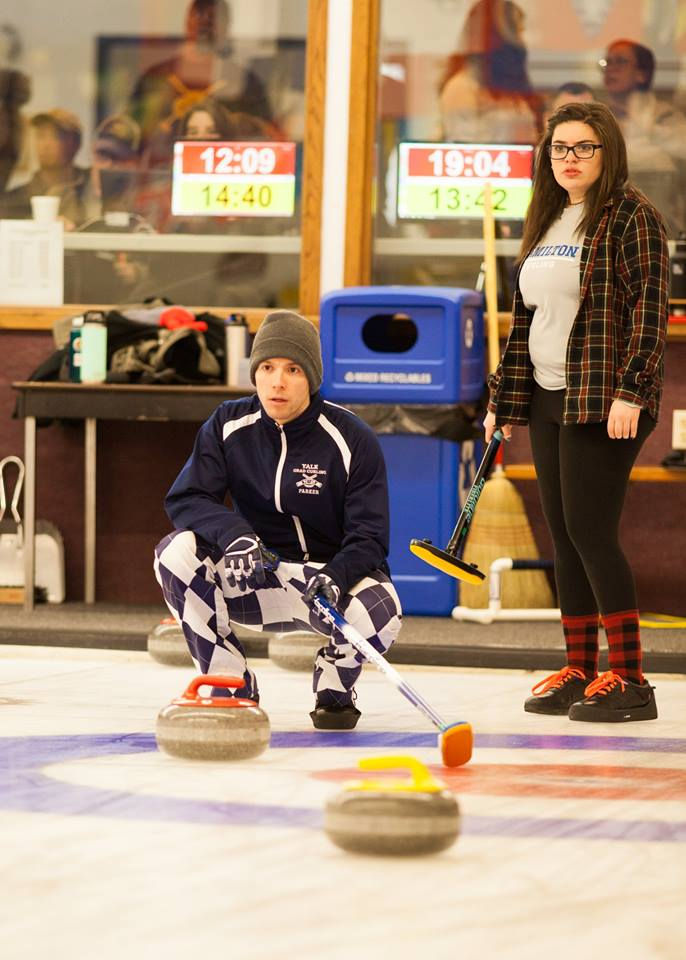
The team in action at Nationals in Rochester, NY in 2015.
Even though we got whooped that year at Nationals, the journey had been incredible. I was realizing that curling was an amazing sport with some amazing people. And though this Fall is disappointing because the team can't start their journey to try to return to Nationals for a seventh straight year (and I therefore can't root for them and watch the streams of their games), you can bet they will be back on the ice as soon as they can. And so will I.
Next week's installment will continue with stories of fundraisers, bonspiels, and finding success at the National level.


Comments